
Casper Dillen's IN CASE OF FIRE TAKE THE STAIRS

Updated: Jul 15
Performance Review
Casper Dillen / Small Sample Size Theatre: IN CASE OF FIRE TAKE THESTAIRS
3rd July 2026
Chisenhale Dance Space

What makes something exist is not what it is, but whether it is seen and recognised.
As I entered the performance space, a relaxed and joyful atmosphere enveloped me, where my attention was drawn to the eclectic array of objects scattered across the stage. Notably, a figure-eight train track loops endlessly, featuring a fish that travels along it, while another fish appears to hover above us. Behind a tall plastic column, what initially looks like a mere backdrop reveals a deeper layer; I soon realise that a performer has been inside the column the entire time, silently breathing in and out. This subtle act causes the plastic to expand and contract, resembling the rhythmic motion of a giant lung. This captivating effect successfully conjures the illusion of an underwater scene throughout the performance, enhancing the overall experience.
The performance opens with a lecture format, featuring a speaker who introduces Hegel's master-slave dialectic. I try to engage with his explanation, but my focus is repeatedly drawn away. Performers dart around the space, engaging in unusual actions at every corner, and objects seem to be in constant motion. Eventually, I find myself listening less and less, and I begin to question whether this is the intended effect. Instead of simply discussing power dynamics, the performance feels like it is choreographing my attention itself.
It is quite remarkable how, as the dance performance progresses, the speaker's presence gradually fades into the background. Ironically, he never stops talking, while the focus shifts to the dancers—their tireless efforts, repetitive movements, and seemingly absurd tasks. Unbeknownst to them, the dynamics between the performer and the audience subtly reverse, highlighting the powerful connection forged through movement and expression.
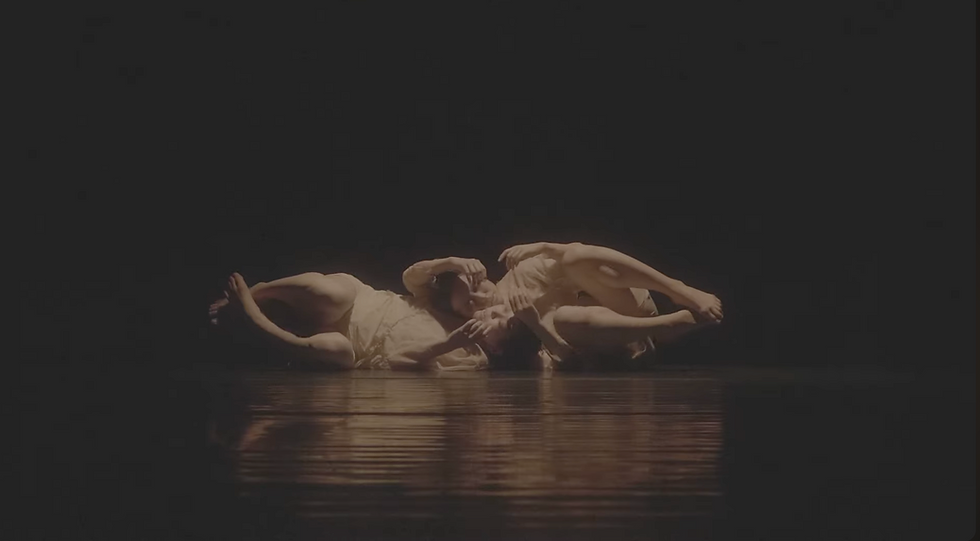
In a captivating performance that blurs the line between art and existential inquiry, the dancers draw the audience into a profound exploration of presence and recognition. One image lingers vividly in my mind: the performers, aligned against the back wall, jump repeatedly as if they are trapped beneath the water's surface; their desperate attempts to break free resonate deeply. In that moment, I realise that we too are submerged, sharing this aquatic realm. This connection intensifies as I remember the hidden performer within a transparent column, breathing steadily throughout the piece. Suddenly, breath transforms into a powerful metaphor—more than a mere physiological act, it symbolises the essence of existence itself.
What intrigues me most about this performance isn’t the accuracy of Hegel’s philosophical concepts but the visceral experience it elicits. It prompts a profound question: if no one acknowledges your presence, do you truly exist? The dance suggests that perhaps attention is not just a distraction; it is recognition—the vital oxygen that allows us to surface and be seen.
After reading the programme note, I reflect on how the work invites us not merely to understand philosophical ideas but to witness the dancers' total commitment to what might initially appear as frivolous tasks. There’s something surprisingly moving about this dedication; it highlights the beauty found in small, seemingly insignificant acts. The performance turns our eyes to the urgency of connection, inviting us to recognise the humanity in each fleeting moment. This is not just dance; it’s an invitation to see, to acknowledge, and to breathe life into the overlooked corners of existence.
Credits
Choreography, scenography and direction:
Casper Dillen
Music:
Gia Dreyer
Set Design:
Jude Cui
Stylist:
Lulu Yang
Costume designs by:
Casper Dillen
Christy Taylor
Lulu Yang
Satur Chong (Mannequin performance)
Zoe Kwok
Wearable installation (Seance) created and performed by:
Electric Adam
Performers:
Angelos Kotzias
Annie Finn
Ayane Ogino
B-boy Illroy
Casper Dillen
Christy Taylor
Dann Xiao
Neo Gao
Noah Meteau
Nye Cooper
Mooting Chang
Paul Tymoshenko
Satur Chong
Serena Thomas
Shujing Huang
Lecture by:
Dr. Joe Saunders
Mezzo-soprano:
Tali Nishihara Jones
Photography: Xinyue Tao
Supported by Studio Wayne McGregor through the FreeSpace programme


Comments